
All members of the European Music Project (EMP) ensemble are soloists with vast experience in classical ensemble performances along with improvisation and experimental styles. The EMP is synonymous with innovative programme concepts, elaborate presentation techniques and a philosophy of engaging with a wide variety of audiences. Many of its projects are developed in collaboration with artists from the fields of dance, visualarts and literature. EMP draws parallels – between classical modernism and the present day, between chamber music and club sounds. Its music is set against the backdrop of a world in a state of flux and the ensuing cultural and social challenges. EMP experiments with different spatial, sound and performance concepts, threading the boundaries between concert performances, ritualism, installation, staging and spontaneity. The ensemble has a varying constellation, ranging from a trio to a chamber ensemble.


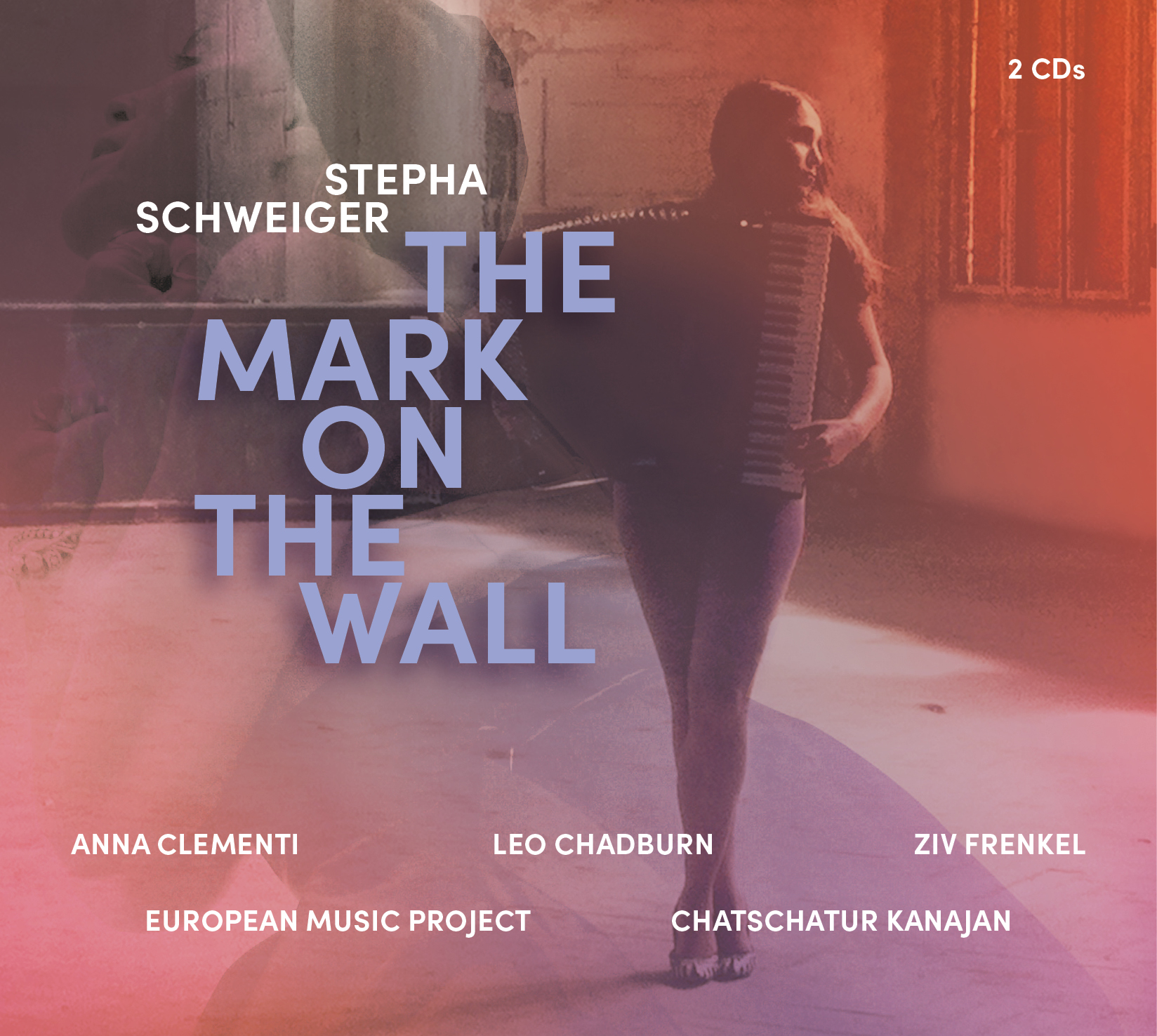
A stream of thought, an inner monologue that is expressed through the music – an awakening: In The Mark on the Wall, Stepha Schweiger reimagines Virginia Woolf’s iconic 1917 stream-of-consciousness short story as a musical experience of rare depth and evocative force. Over the course of the story, the first-person narrator is sitting in an armchair during the seemingly never-ending stretch of time following afternoon tea, pondering on the nature of a small object on the wall, which ultimately turns out to be a snail right at the very end only when another person enters the room. As the action unfolds, the narrator’s mind wanders repeatedly, and eventually – far removed from the reality of war – they become completely immersed in their daydream.
Schweiger’s composition stays true to the sequence of the original text: delicately structured into five acts that flow almost seamlessly into one another, tracing the narrative shifts ofVirginia Woolf and allowing them to flow thoughtfully into musical spaces of varying breadth and duration. In doing so, the emergence of insight unfolds inslow motion – tentative, dreamlike, seismographic. The musical style draws upon both traditions and contemporary trends, while remaining consistently open, purposeful and forward-looking in its pursuit of sound and transformation. The short story is reinterpreted by Stepha Schweiger as an exciting, immersive audio drama with textures that never fail to surprise, while setting it in a futuristic context.
The work is musically underpinned by the clarinet, accordion, electric guitar,drums, piano, viola, double bass and electronics. The renowned vocal artist Anna Clementi performs the score part composed especially for her, alongside the outstanding London-based vocal performer Leo Chadburn and Ziv Frenkel. All three depict different facets of the first-person narrator. Leo Chadburn acts as Anna Clementi’s vocal alter ego. Ziv Frenkel, the dancer on stage, speaks his only words of the entire piece during a climactic moment towards the end of Act IV: “The Mark on the Wall”. This sentence feels like a juncture of profound stillness, before leading to the finale of the daydream – a moment to drift even deeper and immerse oneself completely in nature.
The natural dimension at the end of the story finds its counterpart in the tuning of the instruments. From the midpoint of the musical action onwards, the players ever so slightly detune individual strings on the electric guitar, viola and double bass – while the piece continues, effectively integrated into the composition – almost imperceptibly shifting towards a specific natural tuning. The score parts for the other instruments and the singer were adjusted to match this tuning, while the pitch-fixed piano is noisily played by striking the body rather than the keys,before its sound finally fades away completely.
“Even so, life” is a song about the lifeof trees and how, even after their natural lives have come to an end, they canbe found everywhere in our society, living on there as wood: “all over theworld, in bedrooms, on ships, on the pavement, as panelling in rooms where menand women sit after tea …”. The track has almost a cabaret feel to it, andall the musicians are performing, except for the pianist, who, in the stageversion, is sitting beneath Ziv Frenkel, who has turned into a tree. “This treeis full of peaceful thoughts, happy thoughts.” (Virginia Woolf)
I can think, whether standing or sitting. “I can think” is a song about the nature of knowledge and portrays thinking as something fundamental and independent. Knowledge, on the other hand, is not a clearly defined, objective construct, but has evolved historically from traditions that were often labeled “irrational” or“superstitious.” Scientists are the “descendants” of witches and hermits who sought to understand nature and the cosmos through observation, symbols, and rituals. The track explores this human ability and asks where knowledge might lead us and what we will ever truly “know”—for example, about the universe. These reflections unfold against a jazzy soundscape that creates a dense, suspenseful atmosphere. A dripping cave serves as an electronic space in which a captivating, minimalist structure of constantly shifting harmonies between the vibraphone and double bass unfolds, with the vocal part – interspersed with spoken text – taking centre stage.
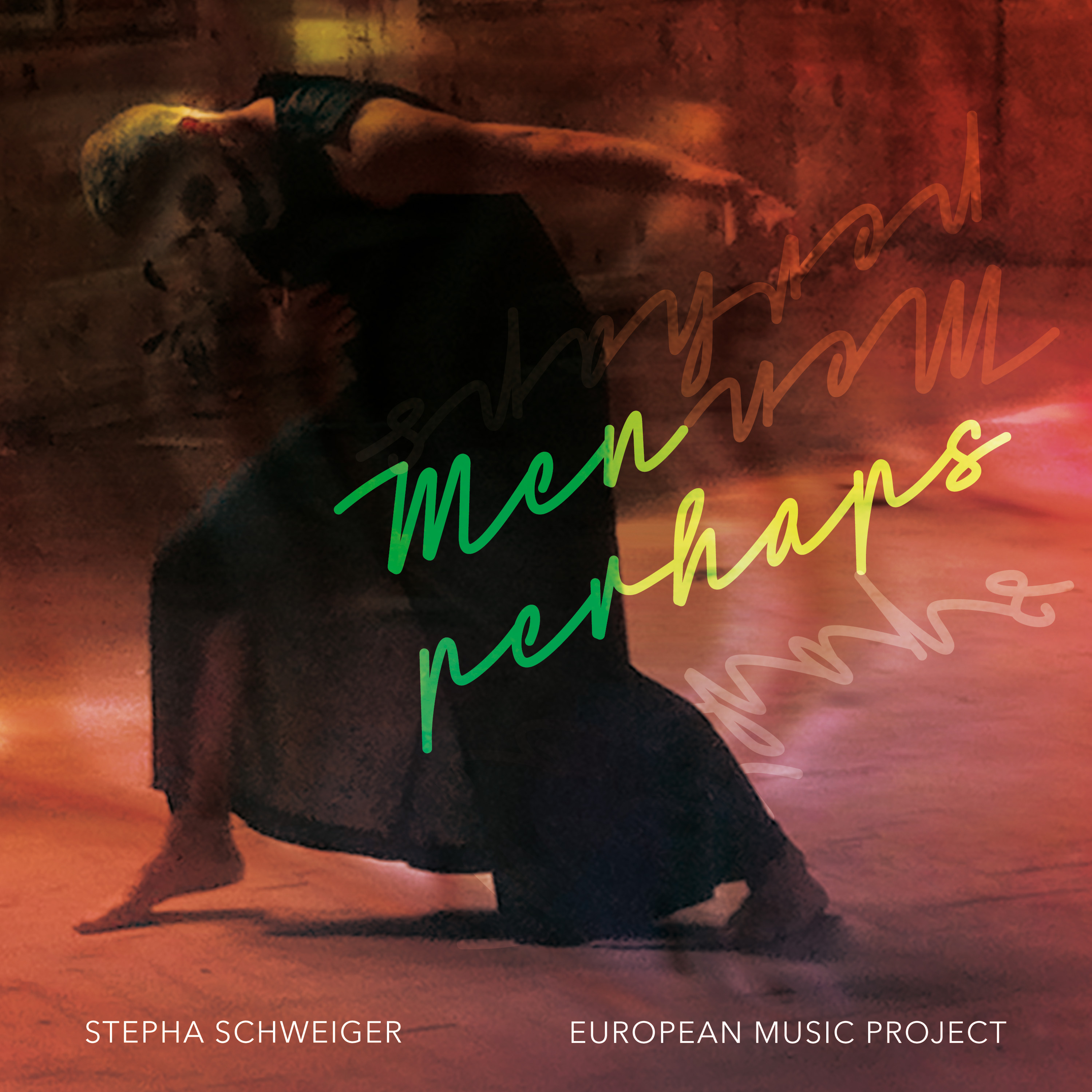
‘Men perhaps’ is the first single release from the upcoming double CD of the musical audio drama ‘The Mark on the Wall’ by Stepha Schweiger, based on the stream-of-consciousness short story of the same name by Virginia Woolf, performed by the European Music Project ensemble. ‘Men perhaps’ unfolds a dense, essayistic soundscape exploring the more or less visible norms of our society. In the same way, Whitaker’s Table of Precedency appears to dictate its irrefutable hierarchy. Yet gradually, as if by magic, these laws slip away until, in the end, only phantoms remain. In this process, the voices and electronic instruments mysteriously merge with the resonant space as a floating web of overlapping proximity and distance, order and dissolution, and ambivalence. Clear gestures meet fragile textures; steady rhythms dissolve into microtonal nuances, pauses and a delicate wall of sound.
„Schon 2017 wurde ihre (Stepha Schweigers) avantgardistische Oper „The Mark on the Wall“ uraufgeführt, 100 Jahre nachdem Virginia Woolf die Kurzgeschichte geschrieben hat, die sie da Anna Clementi in den Mund legte. 2019 wurde das eingespielt mit noch Leo Chadburn, der rezitiert, während Clementi tagträumerisch oder etwas animierter, etwas theatralischer singt und spricht. Zu vom European Music Project mit Klarinetten, Akkordeon, Drums & Percussion, Viola, Kontrabass und Sound Design fein pointierter und gezielt aufflammender Musik, d'accord mit Woolfs Süffisanz. An E-Gitarre der mit Udo Schindler gehörte Johannes Öllinger, der 2005 Schweigers „Schneefeld für Konzertgitarre“ performt hat. … Statt einer 'modernen' Oper mit kläffenden, gilfenden, gröhlenden Mezzen und Tenören ein ziemlich besonderes Hörspiel der Extraklasse!“